
Invisalign Wakefield
The Clear & Comfortable Path to Straight Teeth

Have you avoided orthodontic care because you couldn’t imagine wearing traditional metal braces for a year or more? The good news is that bracket-and-wire braces aren’t the only option for image-conscious adults and teens who want a straighter, more confident smile. Invisalign in Wakefield has quickly become the go-to treatment for orthodontics. If you are ready to start your journey to a straight smile, take your first step by contacting our dental office to schedule your consultation.
Why Choose Schumacher Dental for Invisalign?
- Able to Handle Even Complex Orthodontic Issues
- Invisalign TEEN: Uniquely Suited for Younger Patients
- Treatment Overseen by a Certified Prosthodontist
What Is Invisalign?

Invisalign is an FDA-approved cosmetic braces solution that’s virtually invisible because it uses a series of custom-made aligners instead of brackets and wires. As you go through your treatment, you wear each custom set of aligners for about two weeks, with each one progressively repositioning your teeth. This not only eliminates the embarrassment of wearing traditional braces, but it also leads to fewer office visits because there’s nothing to tighten or adjust.
How Does Invisalign Work?

Your cosmetic dentist in Wakefield takes a 3D impression of your mouth to map the movement of your teeth. The information is transferred to a series of clear plastic aligners that are worn over your teeth for at least 22 hours per day. You switch to the next aligners in the series after one to two weeks depending on your treatment plan. As you progress through the series, your teeth gradually move into alignment. On average, it takes about 12 months to finish your series of aligners.
Benefits of Invisalign
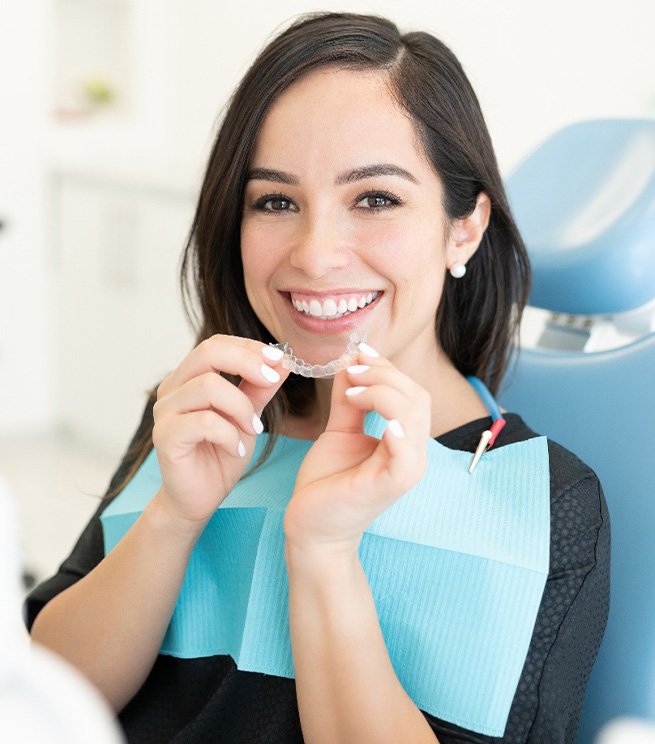
Although braces are the tried-and-true solution for straightening smiles, they also notoriously cause discomfort and can leave patients feeling self-conscious about the way they look.
Meanwhile, Invisalign continues to gain popularity as an effective alternative that offers several unique advantages. Continue reading to learn more about the different benefits of this service to help determine if it’s right for you!
Improved Comfort
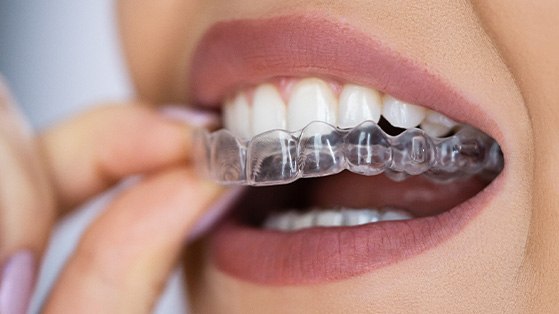
Traditional orthodontics rely on sharp metal brackets and wires attached to your enamel, which can cut the tender tissues inside your mouth and interfere with basic functions, like eating and speaking.
Fortunately, the smooth plastic material used for Invisalign is unlikely to poke or jab the insides of your lips, cheeks, and gums, and it can shift your teeth to their ideal positions much more comfortably.
Removable Trays
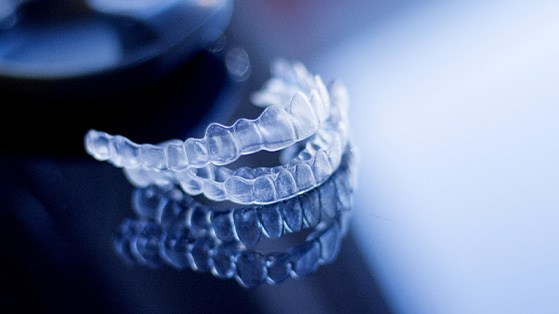
Another reason so many patients choose Invisalign is that, unlike braces, it uses removable trays that you can easily take out of your mouth for meals and cleanings. That means this treatment option requires fewer changes to your daily habits and routines, like your dietary choices and oral hygiene regimen, making it a less invasive solution.
Transparent Material
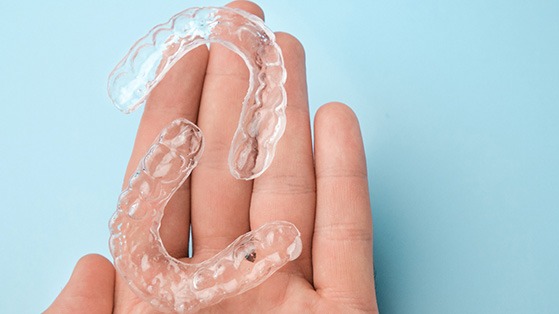
The bulky metal brackets and wires of traditional orthodontics can detract from your appearance and make you feel self-conscious, but thankfully, that’s not the case with this service.
Invisalign utilizes transparent plastic trays that let your enamel show through, making it harder for anyone to notice them, especially from a distance, which can alleviate anxiety about being judged for your appearance throughout your treatment.
No Dietary Restrictions

The plastic material isn’t meant to be worn for more than a week or two, so it isn't designed to withstand the pressures of daily biting and chewing. That means Invisalign should be removed to eat or drink anything other than cool or room-temperature water.
Because patients don’t wear the trays for meals, they can enjoy their favorite foods without worrying about harming their orthodontics.
Easier Dental Hygiene
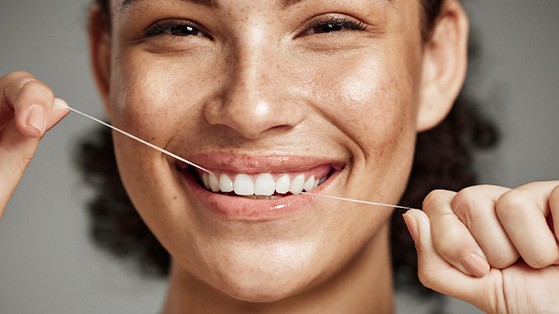
Many people struggle to brush and floss around traditional braces, and doing so often requires special accessories, like interproximal brushes, floss threaders, or an oral irrigator.
But these clear aligners can be removed for cleanings, making it much easier for patients to maintain their twice-daily at-home dental hygiene routine to prevent cavities, gum disease, and other common oral issues.
Faster Treatment Timelines
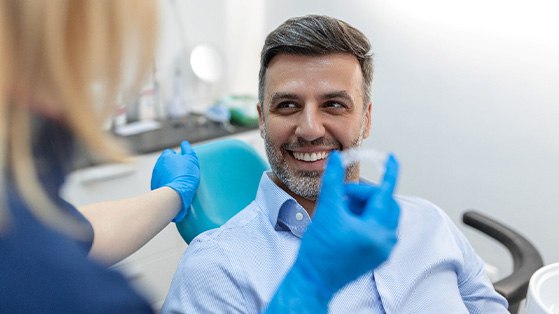
Another reason so many people choose Invisalign is that it can often be completed in 12 to 18 months, compared to the 24+ months often required for standard orthodontics. Furthermore, although you’ll be expected to schedule routine follow-up appointments throughout your treatment, these visits can be as brief as 15 to 30 minutes because there are no brackets to examine or wires to adjust.
Living with Invisalign Aligners

Since Invisalign has been one of the most popular orthodontic treatments for over 20 years now, you likely already know quite a bit about it. But do you know what your day-to-day life will look like with clear aligners? If not, don’t worry – this section covers everything from how to take care of your trays to how often you need to wear them to stay on track with your treatment plan.
Wearing Your Trays

Although each Invisalign treatment plan is unique, there are some aspects of the teeth-straightening process that are universal, including the daily wear time. To avoid lengthy delays, you need to keep your aligners on for 20-22 hours a day. We recommend using the stopwatch on your phone to track your wear time, especially when you’re first trying to establish a routine.
Tip: Multitask where you can! For example, keep your aligners on while you prepare your meals and soak them in a dentist-approved cleanser while you brush your teeth.
Cleaning Your Aligners
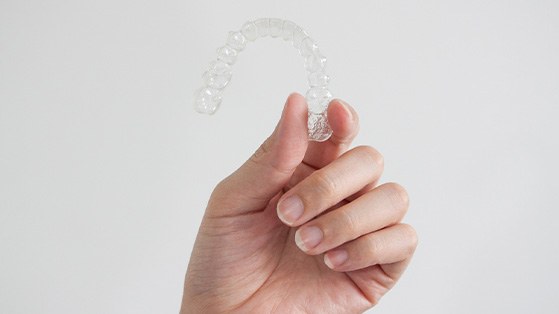
Since Invisalign aligners are removable, taking good care of your smile during your treatment is easy! Simply brush, floss, and rinse with mouthwash as you normally do. Then, use a soft-bristled toothbrush and clear antibacterial soap to gently remove saliva, food particles, and other debris from the surface of your aligners.
Eating & Drinking

Unlike traditional braces, Invisalign doesn’t come with a long list of dietary restrictions. In fact, you can enjoy pretty much all of your favorite meals and snacks as long as you remove your aligners first! As your dental team, all we ask is that you don’t overindulge on sugary foods and drinks (i.e., ice cream, soda, chocolate chip cookies) so you’re less likely to develop a cavity.
Important reminder: When you’re done eating, you need to brush your teeth and rinse your aligners with water before placing them back in your mouth.
Losing or Damaging a Tray

Anytime you aren’t wearing your aligners, you should place them in their protective case to prevent them from getting lost or damaged. Even if you are typically pretty good about doing this, accidents sometimes happen. In this situation, the best thing to do is to contact our Wakefield dental team. That way, we can determine if you can move on to the next set in the series or if you need to revert to the previous set while a replacement is made.
Attending Progress Appointments

Although there aren’t monthly adjustment appointments with Invisalign, there are progress visits. These usually take place every 6-8 weeks, and they allow our team to monitor your progress. If your teeth are moving as anticipated, then there’s a good chance that you’ll be in and out of our office in less than 30 minutes. If you’ve fallen off track with your treatment plan, however, then we will need to figure out why that is and what needs to be done to prevent significant delays.
Invisalign Teen

If you have a teenager at home who’s frustrated by their crooked teeth, they might benefit from Invisalign Teen. Unlike traditional orthodontics, this treatment relies on clear, plastic aligner trays that fit snugly over their teeth to reposition them gently. They’re less visibly intrusive than bulky metal brackets, which is ideal if your child is already feeling self-conscious about their appearance. Not only that, but the smooth material won’t lacerate the tender tissues inside their mouth.
Continue reading below to learn more about this method, and feel free to contact our friendly office staff for additional information.
How Is Invisalign Teen Different?

Invisalign Teen is specifically designed with young adults in mind. To straighten your child’s teeth, this treatment uses a series of trays that are changed out about every two weeks. Although this schedule doesn’t differ much from the standard Invisalign procedure, these trays differ in one significant way. They include a series of discreetly hidden blue dots that slowly fade over the two weeks. This visual indicator makes it easy for your teen to know when it’s time to switch to their new set to continue their progress.
Is Invisalign Right for Your Teen?

Although it provides many benefits, Invisalign Teen isn’t the best option for everyone. Your youth might be a good fit if they:
- Can follow directions. They’ll need to wear their trays for 22 hours every day so their teeth don’t revert to their previous placements.
- They are concerned about how they look. Clear trays are much less noticeable than metal brackets would be, so they don’t have to worry as much about their image.
- Have tooth sensitivity. This method causes fewer aches than traditional orthodontics and is ideal for teenagers with a low pain threshold.
- Have minor issues to address. If your child has a major bite misalignment or severely crooked teeth, Dr Schumacher might recommend braces instead.
The Benefits of Invisalign Teen

Invisalign Teen can benefit your youth in multiple ways, such as:
- They’re removable. Unlike metal orthodontics, your child will take their aligners for sports and physical activities, so they won’t be harmed. This also protects the insides of their mouth from potential injury.
- They blend in. The transparent material can’t be easily spotted, so your teenager doesn’t feel as self-conscious about school photos or socializing.
- They’re easier to clean. Instead of struggling to clean around brackets and wires, your child removes their aligners to scrub them. Then, they can brush and floss twice daily as usual.
- Shorter appointments. Our team doesn’t have to spend time adjusting or repairing materials like braces, so your follow-up visits are likely to wrap up quickly.
How Do I Care for My Invisalign Aligners?

Maintaining your oral hygiene during your treatment is easy. Simply brush and floss your teeth as you normally do, but plan for a little extra time to clean your aligners. Use a soft-bristled toothbrush and clear antibacterial soap to clean them daily.
After removing your aligners when eating or drinking, brush your teeth and rinse your aligners with water before placing them back into your mouth. When you are not wearing them, be sure to keep them in their protective case to keep bacteria off them and to prevent them from getting lost or damaged.
Who Can Invisalign Help?

If you’re interested in Invisalign, you’ll be happy to hear that this clear aligner treatment is effective at correcting several alignment issues, such as rotations, overcrowding, and gaps. Plus, it can fix bite complications, like open bites. Of course, you’ll need to meet with your dentist so they can evaluate your oral health and orthodontic problems to find out if you’re a candidate, but you’re welcome to read on to learn more.
Crowded Teeth

If your teeth crowd together to the point where they overlap or are tilted out of alignment, then come in for a consultation to explore your treatment options. If we determine that your case isn’t too severe, then we can gently and discreetly guide your teeth into proper alignment with a series of clear aligners. Before you know it, you’ll have a gorgeous smile, improved oral health, and an aligned bite!
Gaps Between Teeth

If there is too much space in your mouth, then your teeth won’t meet evenly. Instead, there will be a considerable space between your two front teeth or several prominent spaces throughout your mouth. Not only does this negatively impact the look of your smile, but it can also increase your risk of tooth decay and other common oral health problems. So, don’t wait – find out if you’re a candidate for Invisalign!
Overbite

A considerable overbite (when your top teeth protrude beyond your lower teeth) can make it difficult to enunciate clearly, chew properly, and smile confidently. Plus, the unnatural position of your jaw can lead to chronic pain, negatively impacting your overall quality of life. Fortunately, Invisalign is an option for patients with mild to moderate cases, which means the journey to an aligned bite will be metal-free!
Underbite

Do your lower teeth sit in front of your upper teeth? This orthodontic problem is known as an underbite, and, if you have one, you know all too well the toll it can take on the look, health, and function of your smile. The good news is that Invisalign clear aligners can guide your teeth and bite into the proper positions with the help of buttons, rubber bands, and other orthodontic accessories.
Crossbite

Like the other bite problems on this list, crossbites can negatively impact your oral health and chewing patterns. There’s another concern, too: premature wear and tear on your teeth. We want to move your teeth and bite into proper alignment before that happens, which is why it’s important to schedule a consultation with our Wakefield dental team sooner rather than later.
Open Bite

When you bite down, your teeth should come together evenly. If they don’t because there is considerable space in the front or back of your mouth, then you likely have an open bite. To find out if you’re a candidate for Invisalign, give us a call – we’ll take it from there!
Understanding the Cost of Invisalign

Even before your consultation, you might be wondering, “How much does Invisalign cost?” While you can try to find the answer online, it’s nearly impossible for one simple reason: there isn’t a flat fee! Since each treatment plan is completely customized, the price varies significantly. Don’t worry – our dental team near Reading will provide you with an estimate at your appointment as well as the factors that impact the cost. If you want to continue your research on the price before then, you can read on, too!
Factors That Affect the Cost of Invisalign

One of the biggest factors that will play a role in the cost of your Invisalign treatment is the complexity of your case. After all, this will impact how many aligners are needed, whether you need to straighten one or both arches of teeth, and if you need additional accessories, like rubber bands. However, it’s important that we also mention that your treatment may require an additional investment down the line if you fall off track with your plan. Typically, this happens if you consistently misplace your aligners or don’t wear them for 20+ hours a day.
Invisalign vs. Delivery Aligners: Which Costs More?

If you’ve seen the commercials for mail-order clear aligner companies, then you know that they focus the majority of their messaging on how much cheaper they are compared to Invisalign. With the average price being around $2,000, that’s true. Even then, alternatives to professional orthodontic treatments are not worth your money. After all, they don’t conduct a thorough exam, they rely on DIY impressions from patients, and they have been sued several times since previous patients have experienced worsened misalignment from their trays. Professional organizations like the American Dental Association don’t trust mail-order clear aligner companies, and you shouldn’t either.
Does Dental Insurance Cover Invisalign?

Although dental insurance is known for covering preventive care, there are some plans that include orthodontic benefits as well! So, it’s worth double-checking if your provider will pay for a portion of the cost. We also recommend reviewing the fine print to better understand your coverage. Usually, this is a “once-in-a-lifetime” benefit, which means it won’t renew like your preventive and restorative ones do each year. As always, if you have any questions during this process, you’re more than welcome to bring them to our team so we can help you find the answers.
Options for Making Invisalign Affordable

Of course, our team is happy to accept payment through credit cards and checks. However, we also know that some patients don’t want to pay for the entire cost of Invisalign upfront. That’s why we also welcome flexible financing with CareCredit! This third-party financier allows you to choose a payment plan that suits your budget best, making your treatment significantly more affordable.
Invisalign FAQs
How long does Invisalign treatment take?
Your Invisalign treatment timeline will depend on a variety of factors that your dentist in Wakefield will examine during your consultation. Based on the severity of the orthodontic problems that you face, we will determine how many sets of trays you will need to wear to fix them. The average treatment time for our Invisalign patients is typically between eight and 14 months.
At your consultation, we’ll outline your entire treatment plan for you, so you know exactly what to expect before you commit.
How do I clean my Invisalign trays?
Cleaning your Invisalign aligners every day is an important part of maintaining your oral health as you undergo treatment. If you don’t, you could develop issues such as cavities and dental sensitivity caused by food debris that gets lodged between your trays and teeth. Here are some tips to make sure that your mouth stays healthy during your Invisalign treatment:
- Take out your aligners before you eat or snack.
- Soak your trays in a 50/50 solution of vinegar and water for 15 minutes at least once a week. Thoroughly rinse them with water afterward.
- Store your trays in a protective case whenever they’re not in your mouth to limit germ and bacteria accumulation.
- Brush your teeth after every time you eat.
- Brush your aligners daily with a soft-bristled toothbrush and clear antibiotic soap. Regular toothpaste is too abrasive and can scratch and damage your trays.
If you have any questions about caring for your trays or would like some additional tips, you can always ask at your next progress check.
What orthodontic problems can Invisalign fix?
Invisalign is a very versatile treatment that can fix a variety of orthodontic problems that range from mild to severe. Here are some issues that we can treat with trays:
- Overbite
- Underbite
- Cross bite
- Gaps between teeth
- Misalignment
- Slight rotation
The best way to learn whether your orthodontic problems can be fixed with this advanced orthodontic treatment is to schedule a consultation with our office.
Do I have to wear a retainer after Invisalign treatment?
Your teeth have a type of muscle memory that allows them to drift back into their original positions if they aren’t held in place. This is why people who undergo any type of orthodontic treatment, including Invisalign, need to wear retainers afterward to preserve their results.